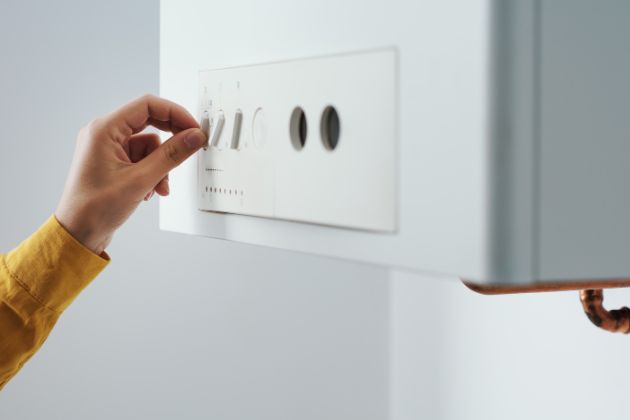
Modern boilers protect themselves by displaying fault codes instead of just breaking down unexpectedly. These flashing letters and numbers might seem confusing at first, but they provide valuable clues about what’s wrong with your system. Understanding these codes can help you decide how urgent the problem is and whether you need to call an engineer straight away. This early warning system helps prevent bigger issues and keeps your home safe and warm.
A fault code is the boiler’s way of telling you it has detected a problem. Different manufacturers use different codes, but they all point to a fault in a particular area such as pressure, ignition or temperature.
Some faults let the boiler keep running in a limited way, while others trigger a shutdown. The code on the screen gives an engineer a head start in finding the fault, so it is always worth writing it down before you touch anything.
Lockout is a safety feature that stops the boiler from trying to fire when it thinks something is wrong. You will usually see a specific lockout code or a flashing warning light, and you may need to press a reset button to clear it.
If the cause was a one-off blip, such as a brief gas supply issue, a single reset can get you back up and running. If the same code appears again, that points to a real fault rather than a glitch.
Persistent lockouts often relate to ignition problems, overheating, sensor issues or fan and flue faults. In those cases, an engineer needs to test, clean or replace parts, not just press reset.
Each brand uses its own numbering system, but most codes fall into a few broad groups. Here is what they usually relate to in plain English.
These codes mean the boiler has tried to light, but the gas flame did not establish or was not detected properly. Causes include issues with the gas supply, ignition electrodes, flame sensor or burner.
You may hear the boiler clicking before it cuts out, or it may try several times and then show a lockout code. This is not something you should try to fix yourself, as it involves gas and combustion parts.
Low-pressure codes are among the most common on combi and system boilers. They usually show if the pressure on the gauge has dropped below around 1 bar.
This can be due to normal water loss over time, a recent radiator bleed, or a leak somewhere on the system. Mild pressure loss can often be topped up, but a repeated drop points to a leak that needs investigating.
These codes indicate the boiler is not happy with how combustion gases are being moved out of the property. The fan, flue or air pressure switch may not be working correctly, or a blockage may be suspected.
Because these parts control how fumes are vented, they are strictly for a Gas Safe registered engineer to deal with. It is not safe to remove covers or flue parts yourself.
Overheat codes suggest water in the boiler is getting too hot. This may be due to circulation issues such as a stuck pump, closed valves, or sludge restricting flow.
Sometimes the boiler will try to protect itself by shutting down before it overheats fully. Repeated overheating can damage internal components, so do not keep resetting without getting it checked.
Sensor codes relate to temperature probes, pressure sensors or other internal monitors that the boiler relies on. If they fail or give readings that do not make sense, the boiler may refuse to fire.
Electrical fault codes may indicate wiring, PCB (circuit board) or component issues. Tracing these requires proper testing equipment and training.
If your boiler displays a fault code, you can follow a simple, safe process before you pick up the phone. You do not need tools or technical knowledge for any of the checks below.
If you can smell gas or your carbon monoxide alarm is sounding, treat it as an emergency. Turn off the boiler, open windows, avoid using electrical switches and leave the property.
Call the National Gas Emergency Service on 0800 111 999 from outside the building. Do not try to reset the boiler or investigate further in this situation.
Write down the exact fault code, any flashing lights and whether the boiler is making unusual noises. If there are any visible leaks or drips, note where they are.
A quick photo of the display can also be helpful. This information saves time when you speak to an engineer.
Most sealed system boilers have a pressure gauge on the front or just underneath. When the system is cold, it usually should sit around 1 to 1.5 bar, but check your manual for the recommended range.
If the pressure is very low or at zero, that explains many low-pressure fault codes. You may be able to top up once using the filling loop, but if it keeps dropping, an engineer needs to find the root cause.
Before assuming the boiler is broken, make sure the heating and hot water are actually being called for. Check the programmer or smart controls, room thermostat and any individual radiator valves.
Sometimes tenants or family members change settings without mentioning it, and the boiler is doing exactly what it is told to do.
In freezing conditions, a common issue is a frozen condensate pipe, which can trigger certain lockout or ignition-style codes. Signs include the boiler trying to start then shutting down, gurgling noises, and an outside white plastic pipe that feels very cold and may be blocked.
If you suspect this, you can safely try gentle thawing methods such as warm (not boiling) water on the outside of the pipe. For more details, see our frozen condensate guide, which explains the process step by step.
If you have carried out the simple checks above and there is no gas smell, you can try a single reset as the manual describes. Stand clear of the boiler front while it restarts and listen for anything unusual.
If the same code returns or the boiler locks out again, stop resetting and switch it off at the controls. At that point, it is time to call a professional boiler repair engineer.
Having a few details ready can make booking a repair quicker and help the engineer prepare. Before you call, it helps to note the following.
Sharing these details helps us bring likely parts, plan the visit and often get you back up and running faster, especially during busy winter periods in areas like Surrey.
Fault codes are useful clues, but they are not a substitute for proper testing by a qualified engineer. If your boiler keeps locking out, shows the same error again after a reset, or you are worried about any noises or leaks, it is safer to get it checked.
For friendly, professional boiler repair, contact Proper Heat Ltd on 07876108958 or book online through our boiler repair service. We will talk you through any urgent safety steps, book a convenient visit and get your heating and hot water working again as quickly as possible.


All Right Reserved © Proper Heat Ltd - Company Number 16342110 | Website by BUILT
.svg)